Boncoura: The Complete Brand Guide, Models, Sizing, and Where to Buy
The verdict, up front
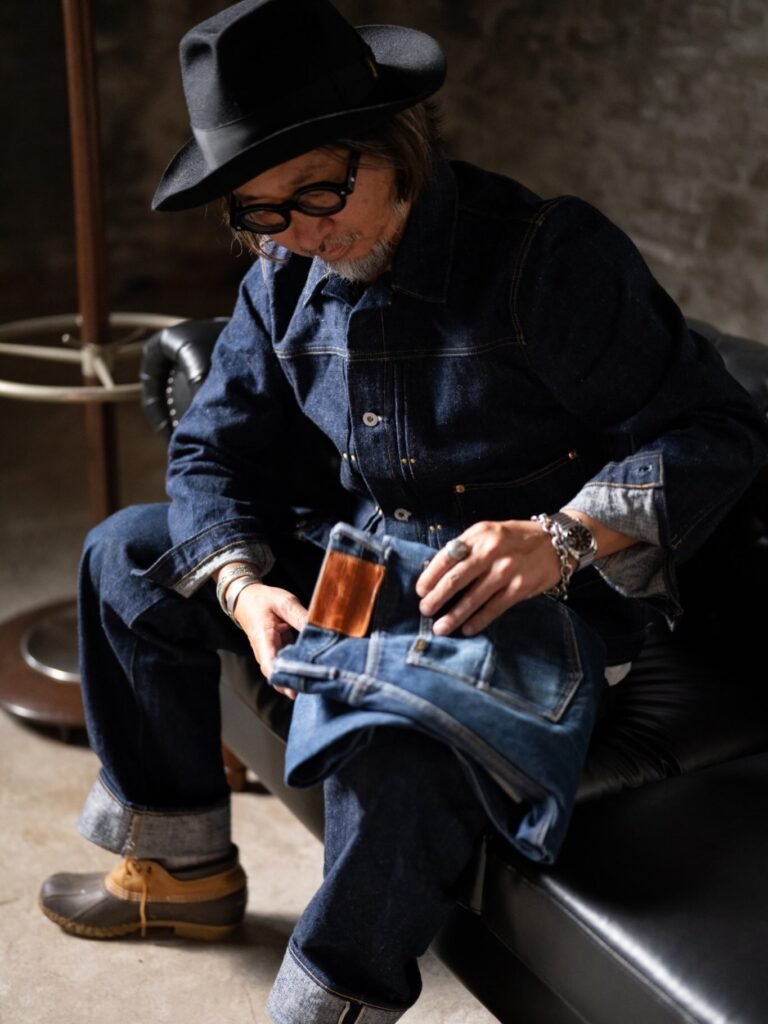
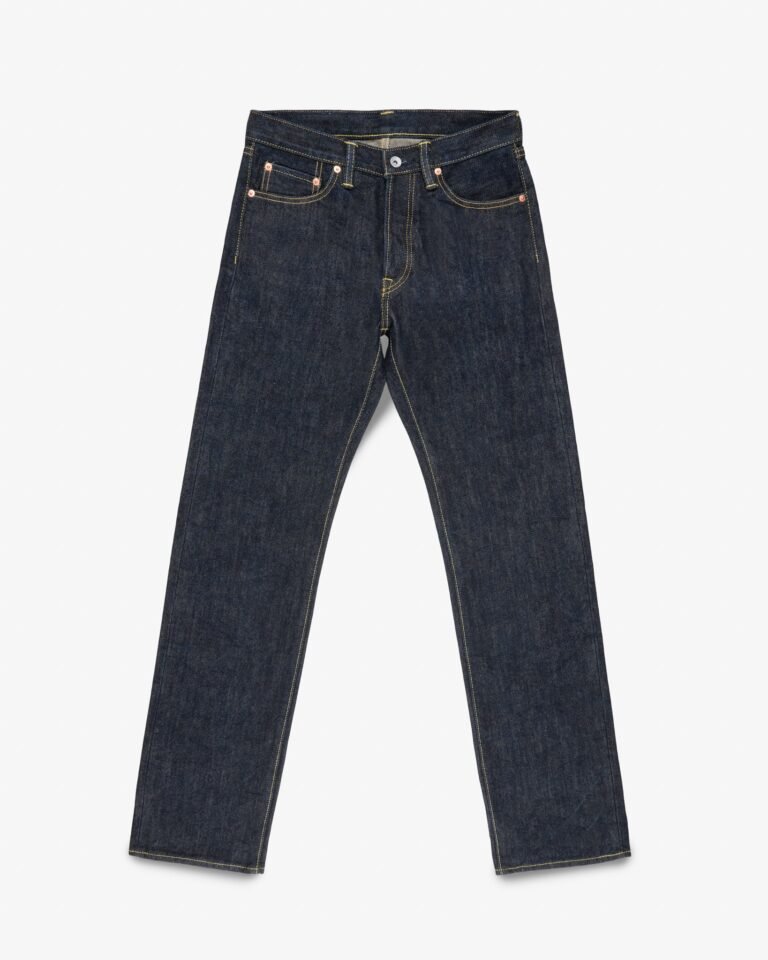
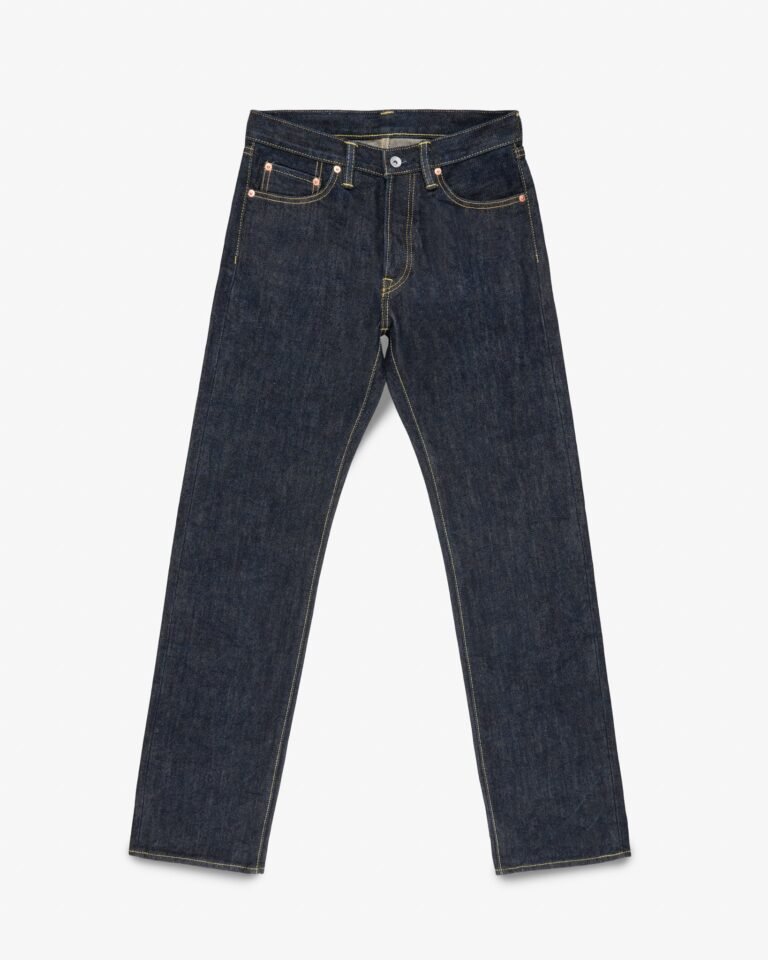
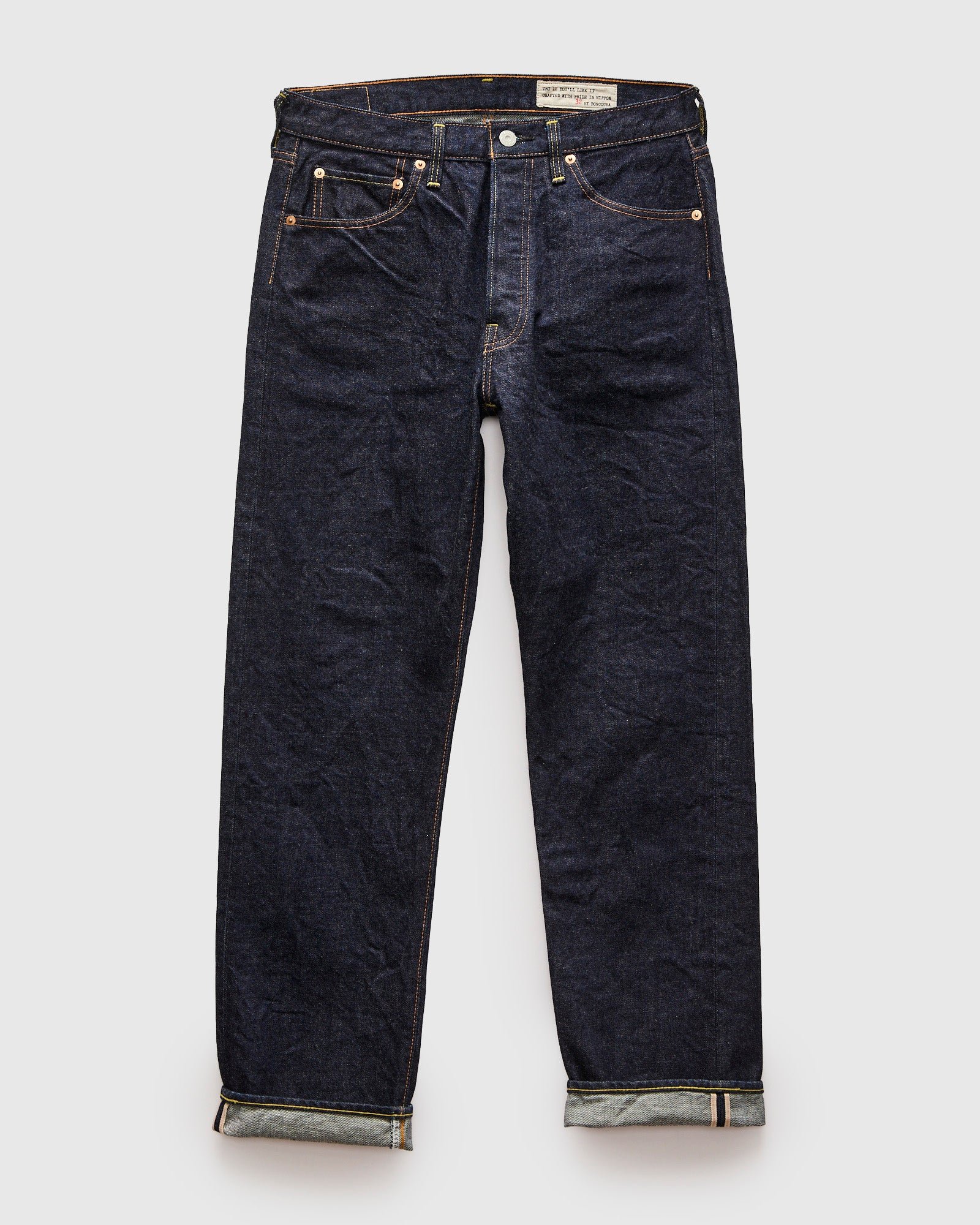
Boncoura is one of the most quietly sophisticated denim brands Japan has produced, and it is the work of a single man, Hisashi Morishima, running a single point of view without a committee to dilute it. If you want the one-sentence version: this is not a reproduction house that copies a vintage jean stitch for stitch, it is a reinterpretation house that studies the old garment obsessively and then builds a new one that ages like the original and reads cleaner than the original. The two jeans that anchor the brand are the XX, a roomier classic straight drawn from the vintage 501XX, and the 66, a slimmer, lightly tapered Ivy League cut. Both are built on the same house denim, a 15oz rope-dyed selvedge Boncoura calls Ike-Momen, and both carry a level of detail that this audience clocks in the first ten seconds of handling them.
Here is the honest headline before you spend a cent. Boncoura sits at the top of its price bracket, and it earns that position through refinement rather than through the maximalist period accuracy that a brand like Warehouse chases. The rises run high and the inseams run deliberately short, cut for a clean Japanese silhouette, so tall and long-legged men have to read the sizing section below before buying. If your priority is the most forensically period-correct reproduction of a specific year, Boncoura is not that, on purpose. If your priority is a jean that feels considered in the hand, fades with drama, and looks quietly expensive without shouting, it is close to the best money you can spend. This guide is long because the brand rewards it. We are going to cover where Boncoura sits in the Japanese denim story, the founder and his archive, the reinterpretation thesis that makes the brand what it is, the fabric science, the full lineup including the limited runs, the two flagship jeans in detail, how it compares to its rivals, fit and sizing, styling, the honest downsides, the value math, and exactly where to buy it across the US, UK, Europe, and Australia.
Where Boncoura sits in the Japanese denim story
To understand why Boncoura matters, you have to place it on the timeline, because it did not arrive during the moment most people associate with Japanese repro. The brands that built this world, the so-called Osaka Five, Studio D’Artisan, Denime, Evisu, Fullcount, and Warehouse, came up through the late 1980s and the 1990s, when a handful of obsessives decided that the vintage American garments being stripped out of the market deserved to be rebuilt properly. That was the reproduction wave. Its whole animating idea was fidelity: find the original, measure it, match the loom, match the thread, and put the deleted details back.
Boncoura launched in January 2011, two full decades after that wave crested. By then the reproduction problem was, in a sense, solved. Half a dozen brands were already making superb period-correct 1940s and 1950s jeans. A new brand arriving in that landscape had a choice: out-accurate the incumbents on their own turf, which is nearly impossible, or do something else. Morishima chose something else, and that choice is the entire reason to care about Boncoura. He treats the vintage archive as a source of principles rather than a set of blueprints. The result is a brand that feels like it belongs to the post-repro generation, alongside makers like TCB and The Strike Gold who also came up after the founders, but Boncoura pushes furthest toward refinement and restraint rather than toward heavier, louder, higher-contrast denim.
That positioning is the single most useful thing to hold in your head. When someone asks whether Boncoura is a repro brand, the honest answer is that it is repro-adjacent. It lives in the same world, uses the same machines and mills, and speaks the same language, but its goal is a degree removed from a stitch-for-stitch copy. Keep that in mind and every other decision the brand makes starts to make sense.
Who is behind Boncoura
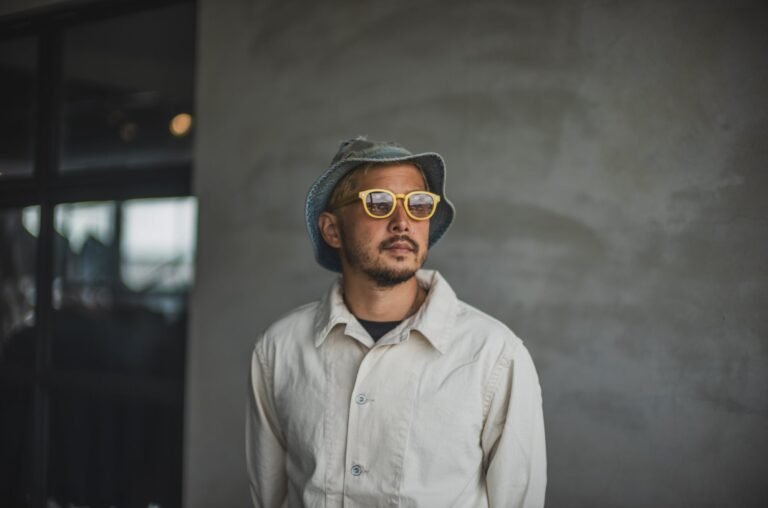
Boncoura is Hisashi Morishima, and the brand is close to inseparable from the man, so it is worth spending real time on him. He grew up near Amerikamura, the America Village district in central Osaka that has been Japan’s clearing house for imported vintage Americana for decades. Amerikamura is not a metaphor here, it is a specific few blocks where generations of Japanese collectors learned to read American clothing by handling stacks of it. That is where Morishima bought his first pair of Levi’s 501XX as a boy, and by his own account that first pair set the direction for everything that followed.
What makes his background unusual is that he did not come up through a factory or a pattern room. He spent roughly 20 years working in a major Japanese department store, in sales and buying, which is a commercial education in what people actually want and what they will pay for. He then moved into work as a vintage curator, handling and cataloguing original American military garments and workwear at close range for years. By the time he started making his own clothes, he had two things most new designers never get: a merchant’s instinct for taste and desirability, and a curator’s archive of originals to study in the flesh. That combination shows up in the product as a brand that is both commercially sharp and archivally serious.
He launched Boncoura in January 2011 with a first run of about 200 pairs of jeans, and per the brand’s own telling that run sold out within minutes. I would treat the exact drama of that number as the brand’s story rather than an audited fact, but the direction it points is real and consistent with everything else: a man who arrived fully formed, with a clear point of view and buyers who were ready for it. Fifteen years on, in 2026, the brand is marking that anniversary with special editions, which tells you the operation has proven durable rather than being a moment.
The name carries the posture. As Boncoura’s own UK stockist explains it, the word blends the French bon courage, meaning something like perseverance or good heart for the work, with the Japanese bonkura, an affectionate and self-deprecating word for someone stubbornly, almost foolishly devoted to their craft. A stubborn devotee who keeps at it. That is not marketing gloss layered on afterward, it is an accurate description of a one-designer house where Morishima keeps his hands on the process from the cotton blend through the weaving through the final stitch choice.
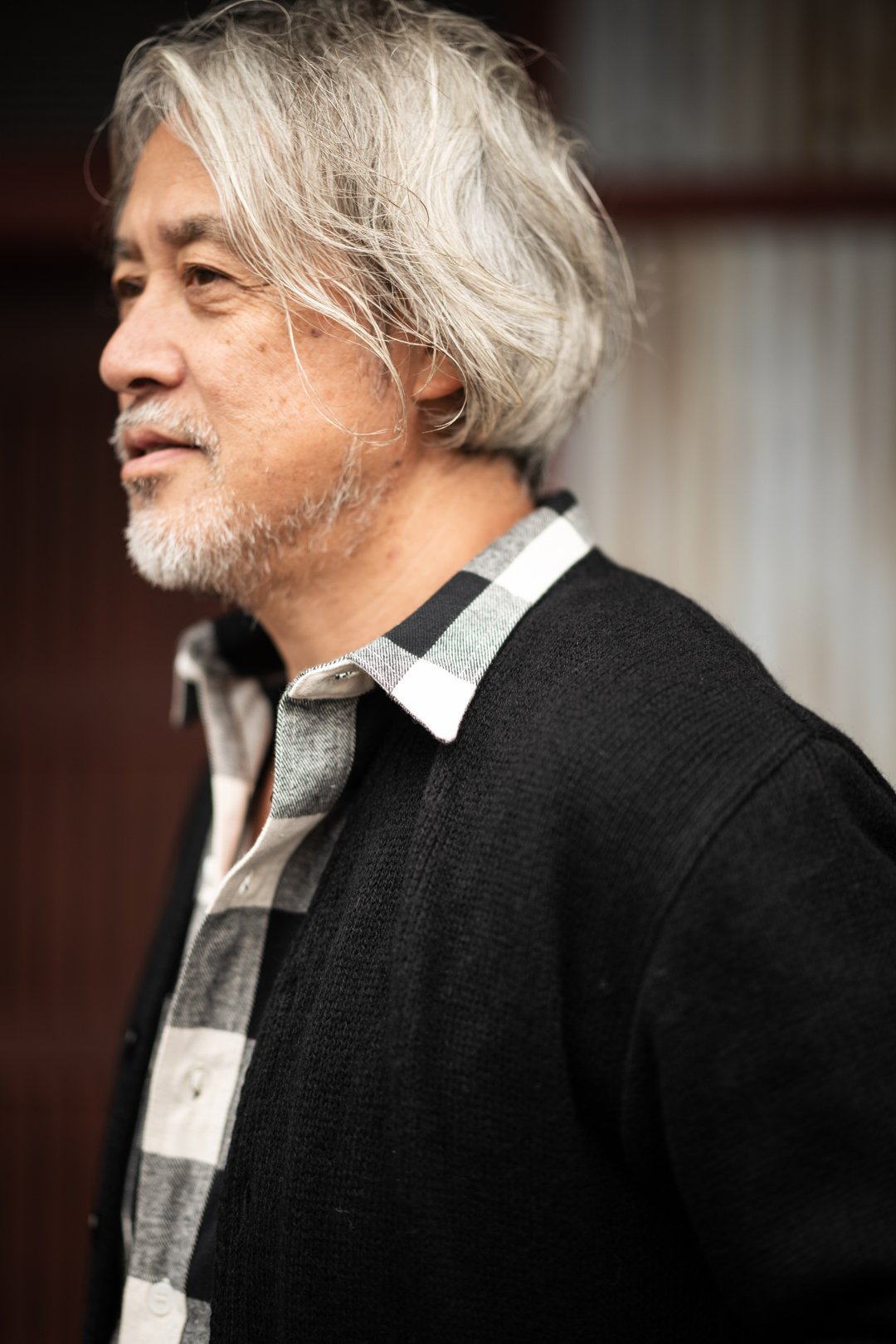
Worth knowing for anyone going deep on the brand: Morishima keeps a long-running blog called Ore wa Bonkura, at boncoura.jp, where he posts fit photos, styling with vintage, and behind-the-scenes on the making. It is the best window into how Boncoura actually wears, and it is where the not-a-reproduction point becomes obvious, because he shows his own clothes worn hard right next to the vintage that inspired them rather than presenting them as old.
The reinterpretation thesis, and why it matters
Say this plainly, because it is the thing most people get wrong about the brand: Boncoura is not a direct reproduction house. It is not trying to make an exact copy of a 1947 or a 1955 original, and grading it as if it were misses the entire point.
Here is the detail that separates Boncoura from a straight reproduction house, and once you see it you cannot unsee it. Morishima has said plainly that his aim is “not to replicate these styles, but to create new originals inspired from those designs that I love.” Sit with that, because it is a genuine philosophical fork, not a slogan.
A pure reproduction brand pins itself to a specific garment from a specific year. Its promise to you is fidelity, and you can grade it against the original like an exam. Did they get the 1947 back cinch right, is the hidden rivet in the correct position, is the arcuate the exact shape. That is a real and valuable discipline, and the brands that do it well are treasures. But it has a ceiling, which is the original itself. The best possible outcome is that the copy equals the source.
Boncoura’s promise is different, and it does not have that ceiling. Morishima studies the originals for their texture, their proportions, and the way they age, then designs a new garment that carries those qualities into a cleaner, slightly dressier line that never existed in 1955. The fades are meant to behave like vintage fades. The hand of the cloth is meant to recall vintage cloth. But the cut is his, tuned for a modern wearer who wants the jean to read a notch sharper than pure workwear. The clothes are explicitly built to age with use and gain character over time, which is the emotional core of this entire niche, and Morishima has put the idea about as plainly as anyone in the business: look after these jeans the way you would a child, and they will love you back.
The construction philosophy backs the talk rather than decorating it. Boncoura works in 100% cotton with no synthetic content in the core fabrics, sources its cloth and its factories by hand across Japan rather than buying off a menu, and runs some of its denim on slow antique looms at a rate reported around 20 to 30 meters a day. A modern projectile loom does many multiples of that. The slowness is not nostalgia for its own sake, it is where the irregularity, the slubby texture, and the character of the cloth come from. You are paying, in part, for a deliberate refusal to go faster.
The fabric: Ike-Momen, and why it fades the way it does
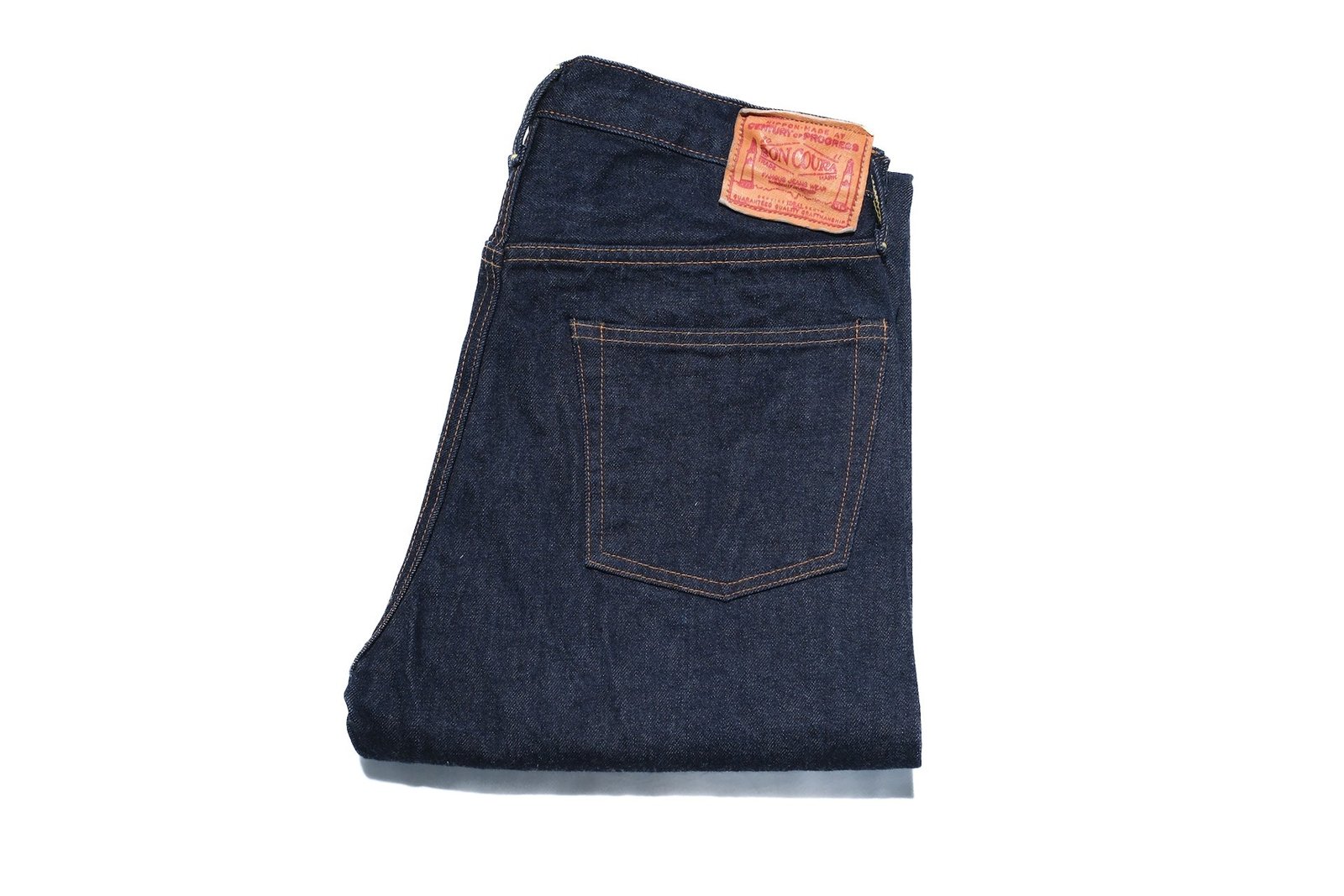
This is where the real ones separate from the rest, so let us name the specifics instead of waving at the word quality. The core denim is a 15oz selvedge that Boncoura developed with a Japanese mill and brands as Ike-Momen. It is built from twisted, uneven yarns rather than smooth uniform ones, which is what gives the surface its slubby, three-dimensional texture and what makes no two square inches of the cloth fade identically.
The dye and weave are the reason it ages with such drama. The warp yarns, the ones that run vertically and show on the face of the denim, are rope-dyed in pure indigo, meaning they are dipped as a rope of yarn so the dye clings to the outside of each thread and leaves a white core underneath. The weft, the horizontal yarn, is left natural and untreated. That is the classic recipe for high-contrast vertical fading: as you wear the jean, the indigo abrades off the raised outer layer of the warp and the white core underneath begins to show through, so the fades run in sharp vertical lines rather than washing out into a flat pale blue. Owners consistently describe the cloth as tough but soft, an unusual combination that comes from heavier yarns woven without over-tightening, and they report pronounced leg twist as the jean settles. That leg twist, where the outseam migrates toward the front of the leg, is not a flaw. It is the signature of an unbalanced twill woven in a loomstate or lightly finished state, the fabric relaxing into the direction its weave wants to go, and vintage denim did exactly the same thing.
One practical wrinkle worth flagging honestly. The current jeans sold through Western stockists are described as rinsed, which is a light wash that removes most of the shrink and settles the fabric, so you are largely buying the size you will keep. Boncoura has also made loomstate and natural-indigo pieces, including a 15th anniversary ’43-XX in natural indigo, which behave differently and shrink more. Always read the specific product’s description rather than assuming, because the brand runs several fabric states across its catalogue.
The details, catalogued
The finishing is where Morishima’s curator background shows most clearly, so it deserves a proper list rather than a sentence.
The selvedge ID. Look at the outseam and you find one of the brand’s signatures, a distinctive orange and yellow intertwined selvedge line rather than the plain single redline most brands run. It is the kind of small, deliberate mark that owners single out as a point of pride, and it is instantly recognizable once you know to look for it.
The thread. The stitching is a custom goldenrod color, which keeps the classic orange of the mid-century era but pushes a touch more yellow in for emphasis, and the stitch count is varied across the garment rather than held at one uniform gauge. That is a designer decision, not a factory default, and it is the sort of thing you feel before you can name it.
The hardware and patch. Custom Boncoura cap rivets rather than off-the-shelf hardware. A vintage foil, machine-stamped deerskin leather patch rather than the usual cowhide or paper, which is an unusual and expensive choice that ages softly. Chainstitched waistband and hem run on the correct machines, so the hem will rope and pucker as it fades the way a vintage chainstitch does.
The cut. Morishima designs for a clean, slightly dressed-up vintage line, which is exactly why the rises sit high and the inseams come shorter than average, hemmed on a specialized machine. This is a Japanese-proportioned, faintly Ivy silhouette by intention. The people who have taken these jeans apart in their heads tend to arrive at the same sentence, that everything from the rivets to the thin pink-lined selvedge to the all-cotton construction is superb, and that consensus is worth more than any single spec.
The full lineup, including the limited runs
Boncoura is far more than a two-jean brand, and understanding the breadth tells you the brand’s real ambition, which is a complete wardrobe built to the same standard rather than a denim label with add-ons. The range spans jeans, denim and leather jackets, chinos and military trousers, shirts, heavyweight loopwheeled tees and polos, knitwear, hats, wallets, and socks. Here are the pieces worth knowing.
| Model | What it is | Notes | Approx. price |
|---|---|---|---|
| XX | The flagship jean, drawn from the vintage 501XX | Classic straight, roomier leg, the brand’s cornerstone | ~$375 to $455 US, from A$693 |
| 66 | The Ivy League jean, the slimmer sibling | Lightly tapered, cleaner line, high rise | ~$375 to $455 US, from A$660 |
| Ike-Momen Cinch-Back | Classic straight with a buckle-back cinch | The dressier, more vintage-formal denim option | from ~A$693 |
| Z / Z-1 | Zip-fly denim and a Z-1 Rodeo rider jacket | For those who prefer a zip, plus a denim rider | varies, jacket ~A$990 |
| ’43-XX WWII (15th Anniversary) | Natural indigo WWII-spec limited denim | Wartime detailing, deeper fade potential, limited | ~A$990 |
| KUROGANE Black XX | Ultimate black XX, limited edition | Black-on-black take on the flagship | ~A$836 |
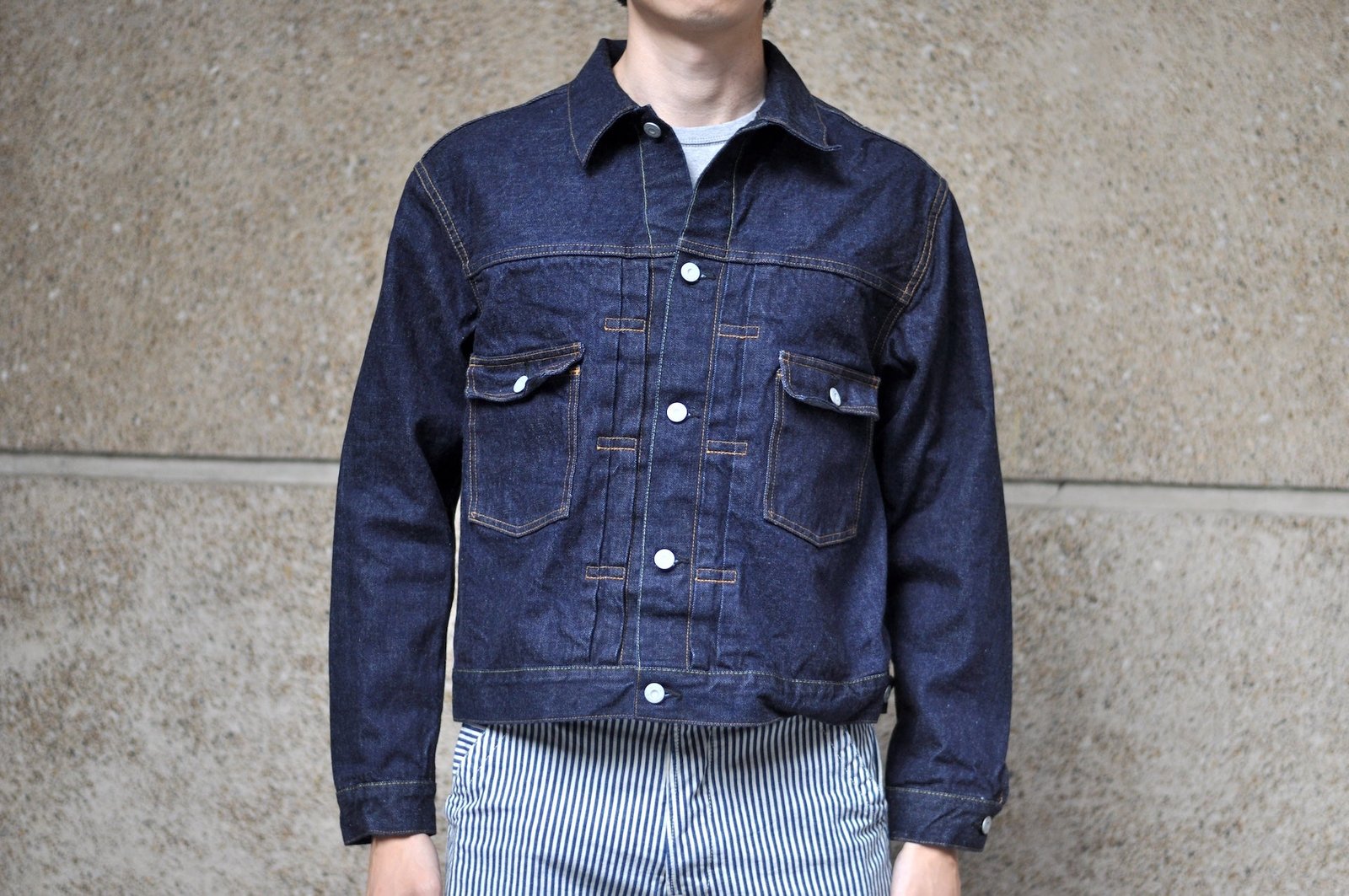
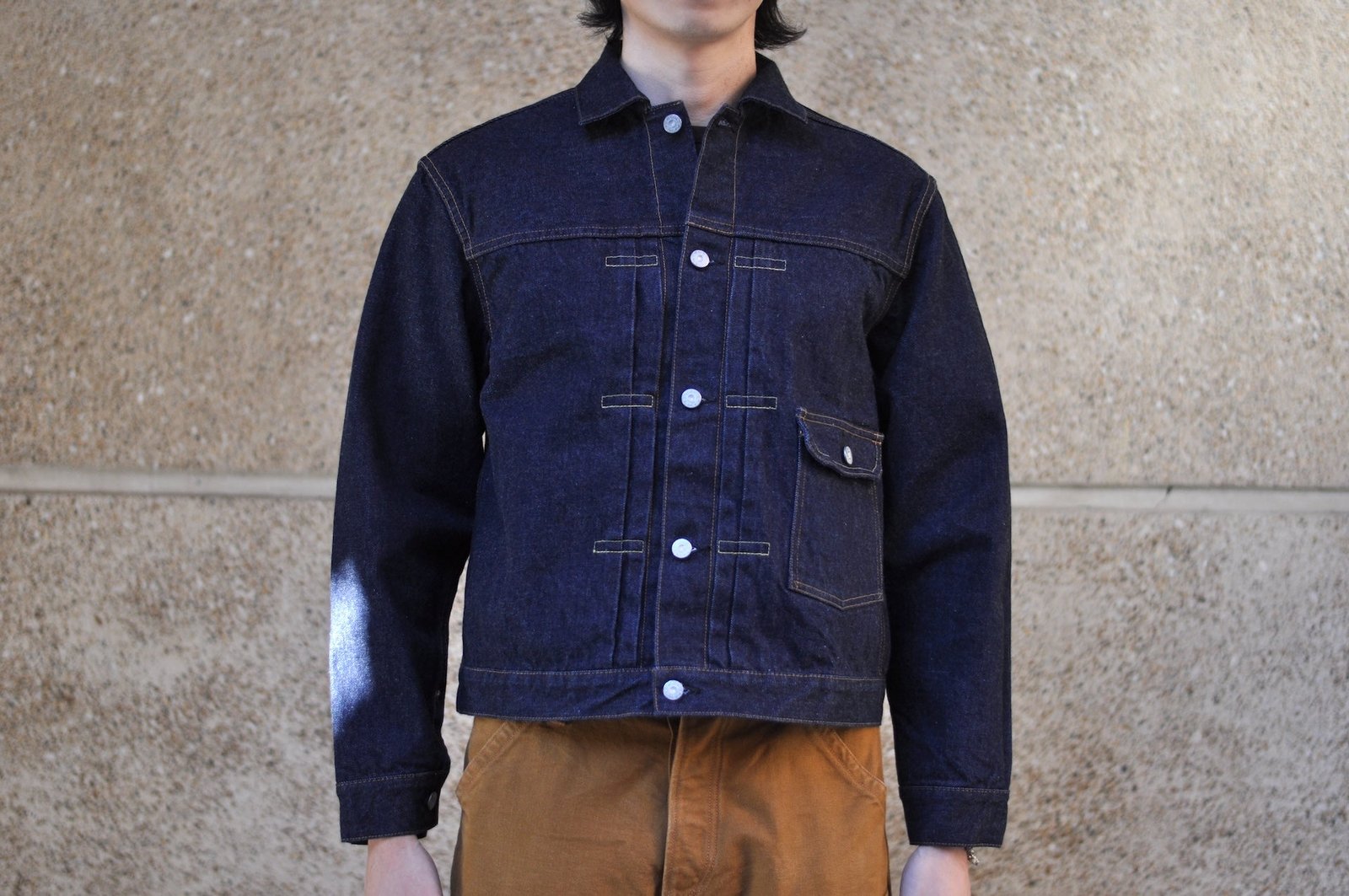
| Denim Jackets Type 1, 2, 3 | First, second, and third-type trucker jackets | Same Ike-Momen denim and finishing as the jeans | ~A$891 and up |
| Chinos and trousers | Selvedge duck ’41 chinos, US Army baker and painter pants, corduroy ’41 chinos | Military and workwear patterns, several fits | ~A$594 to A$748 |
| Shirts | Chambray button-downs, western, work, band-collar, army utility shirts | Vintage-informed cuts | ~£295 chambray BD, from A$693 |
| Tees, polos, knit | 10oz ultra-heavy loopwheeled tees, heavyweight polos, indigo-stained sweatshirts | Loopwheel construction, serious weight | ~A$242 to A$495 |
| Leather and accessories | Horsehide Type 3 jacket, suede and horsehide wallets, US Navy caps | The top-end leather runs into the thousands | wallets ~A$528, horsehide jacket ~A$3,894 |
Prices above are drawn from current US and Australian stockists in August 2026 and move with exchange rates and duty, so treat them as orientation rather than gospel. The spread matters though: this is a brand where a wallet costs several hundred dollars and a hand-waxed horsehide jacket runs to nearly four thousand, which tells you the ceiling Morishima is designing toward.
Beyond denim: Boncoura is building a whole wardrobe
It is a mistake to file Boncoura as a jeans brand that dabbles in a few other things. Look at the catalogue and the ambition is obvious. This is a full wardrobe built to one standard, in the amekaji tradition of blending American workwear, military, and Ivy into a coherent way for a grown man to dress. Morishima came to clothing through vintage of every kind, not just denim, and the range reflects exactly that.
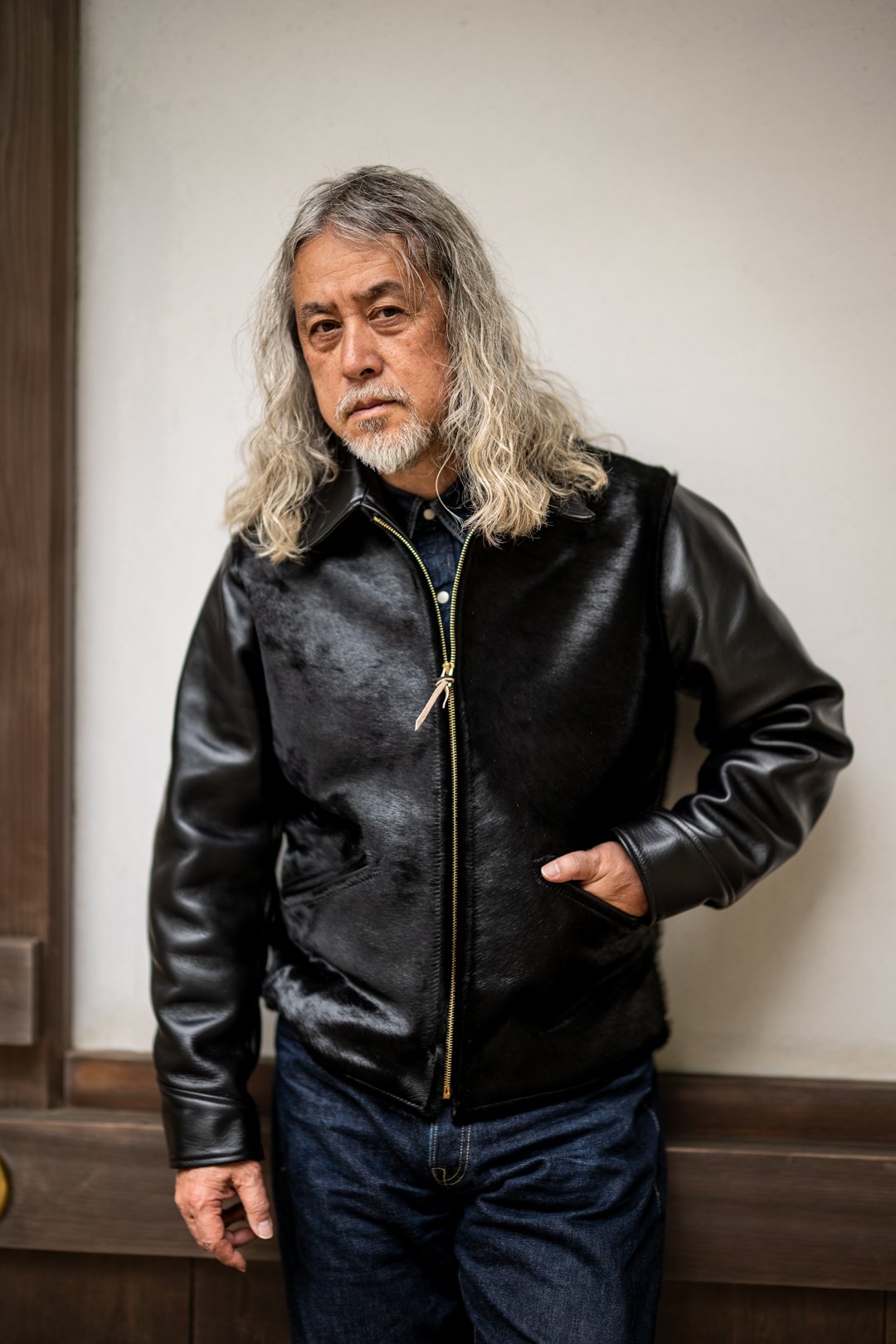
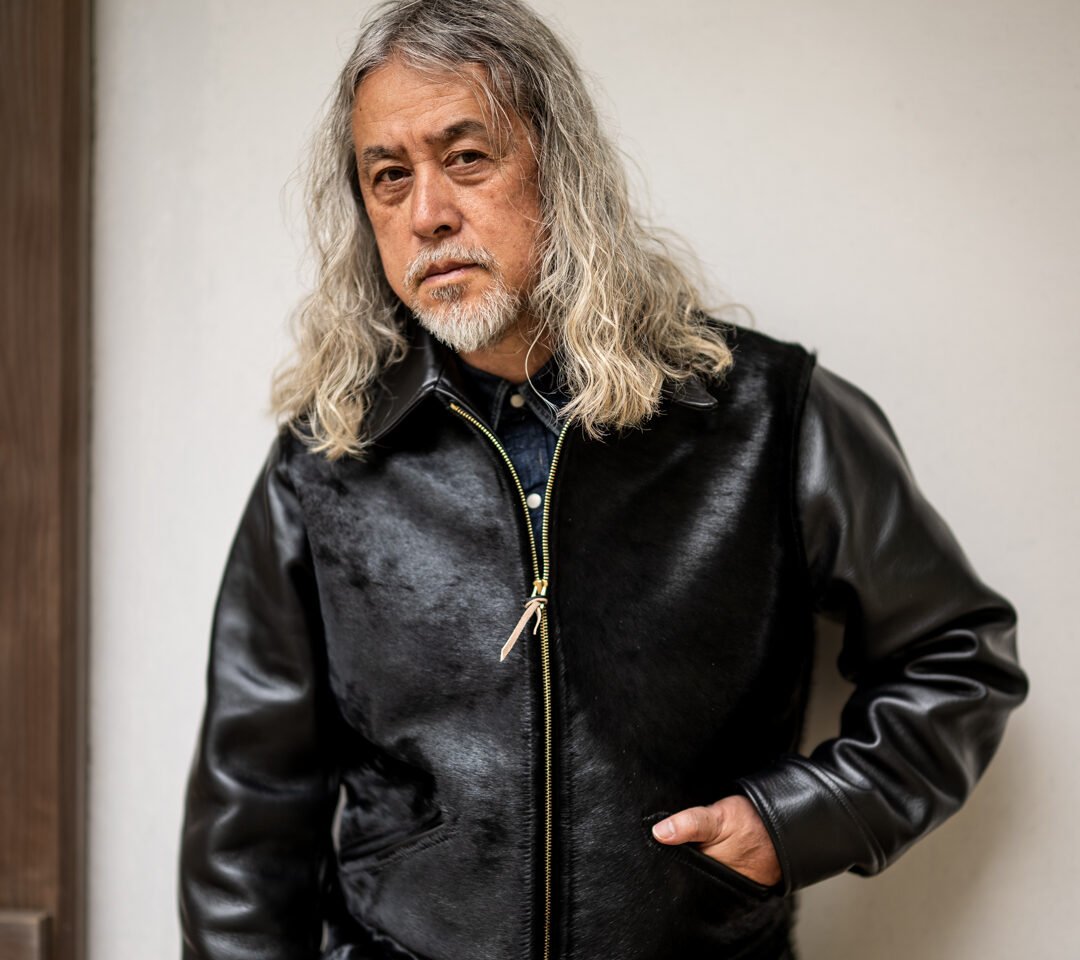
Leather. This is the top of the house and the clearest signal of intent, from the horsehide RIDE jacket to a hand-waxed teacore horsehide Type 3 that runs into the thousands. Teacore leather is chosen precisely for how it wears, the black surface rubbing back to reveal brown underneath, which is the leather version of the same age-with-use philosophy that drives the denim.
Military and workwear trousers. US Army baker pants, painter pants, selvedge duck ’41 chinos, and rodeo pants, all cut from real vintage patterns in Boncoura’s own fabrics. This is where the brand’s archive of military originals pays off.
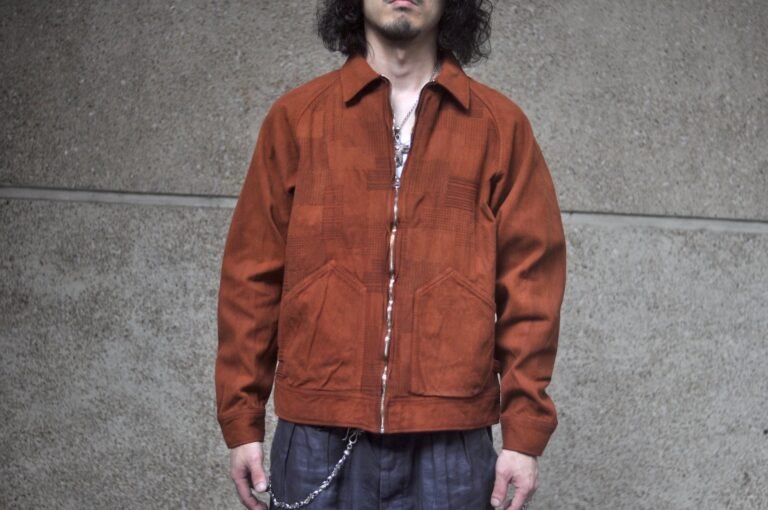
Tailoring and outerwear. Tailored jackets and coats, the heavyweight corduroy Dog Ear sport jacket, and the 40s style weather jacket sit at the dressier, more Ivy end of the line, and they are the pieces that let a Boncoura wardrobe go past pure workwear.
Tops. The 10oz ultra-heavy loopwheeled tees and polos are a cult item on their own, knitted on slow loopwheel machines that produce a tubular, seamless body with a density you cannot get from a modern circular knit. Add indigo-stained loopwheel sweatshirts, chambray and western shirts, and knitwear, and the everyday layers are covered too.
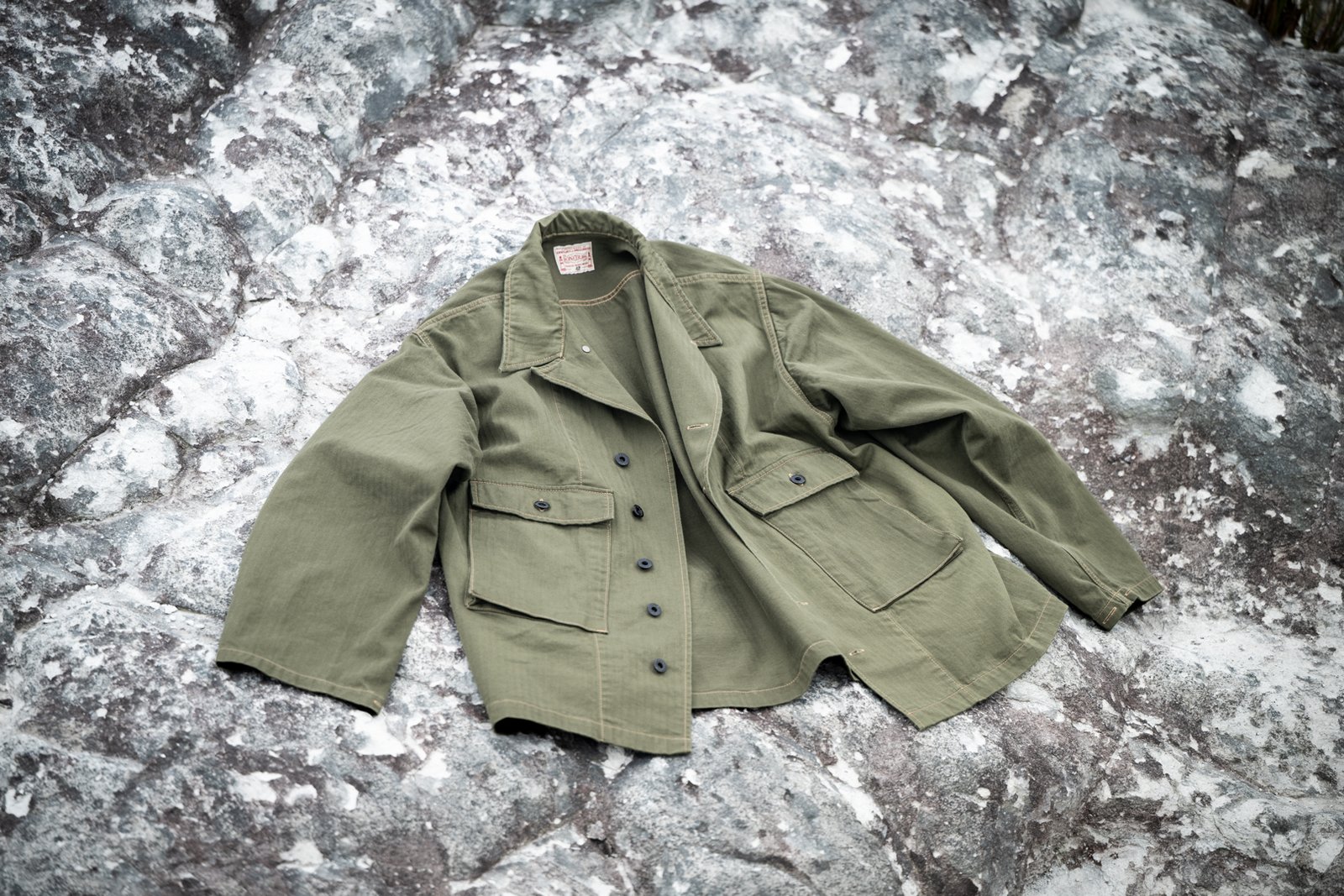
The reason the breadth matters to a buyer is cohesion. Because this is one designer with one eye rather than a committee, a head-to-toe Boncoura outfit hangs together and ages in a single visual language. Buy the jean, then the loopwheel tee, then a denim or leather jacket over a few years, and you end up with a wardrobe that reads as one considered thing rather than a pile of separate purchases. That is the real argument for the brand once you get past the denim.
The two flagship jeans, and who each is for
Boncoura XX: the roomier classic
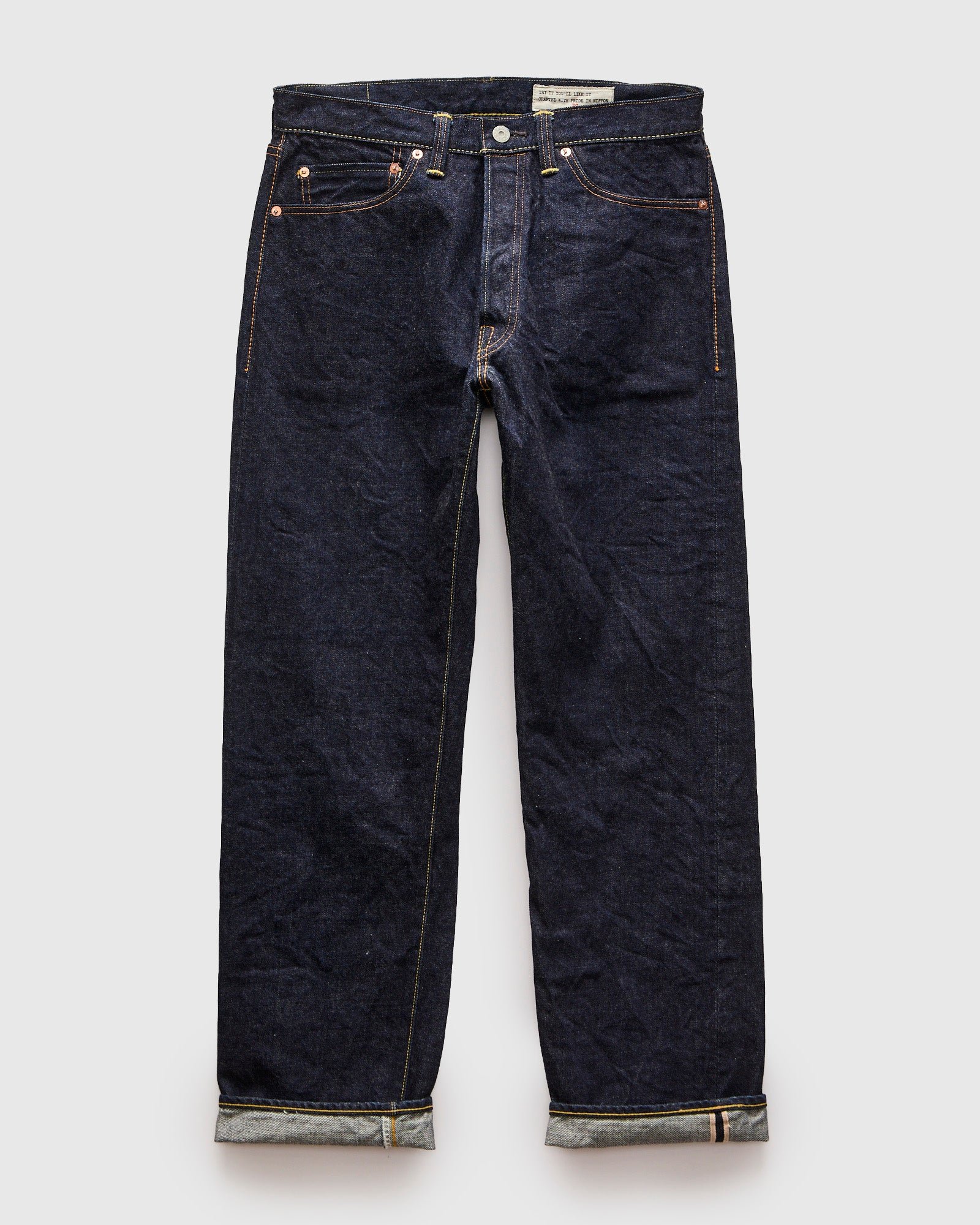
The XX is the cornerstone and the one to reach for if you want a traditional straight leg with genuine room through the thigh and seat and a vintage 501 sensibility. It is the pick for the man who finds most modern Japanese repro cut too slim, or who simply wants a jean that reads honestly as workwear rather than as fashion. On the 15oz Ike-Momen cloth it breaks with strong vertical fading and real leg twist over the first year, and it is the model that most closely delivers the old Levi’s silhouette done to a standard the old Levi’s never reached. If you own one Boncoura, the argument for making it the XX is that it is the purest statement of what the brand is.
Boncoura 66: the refined taper
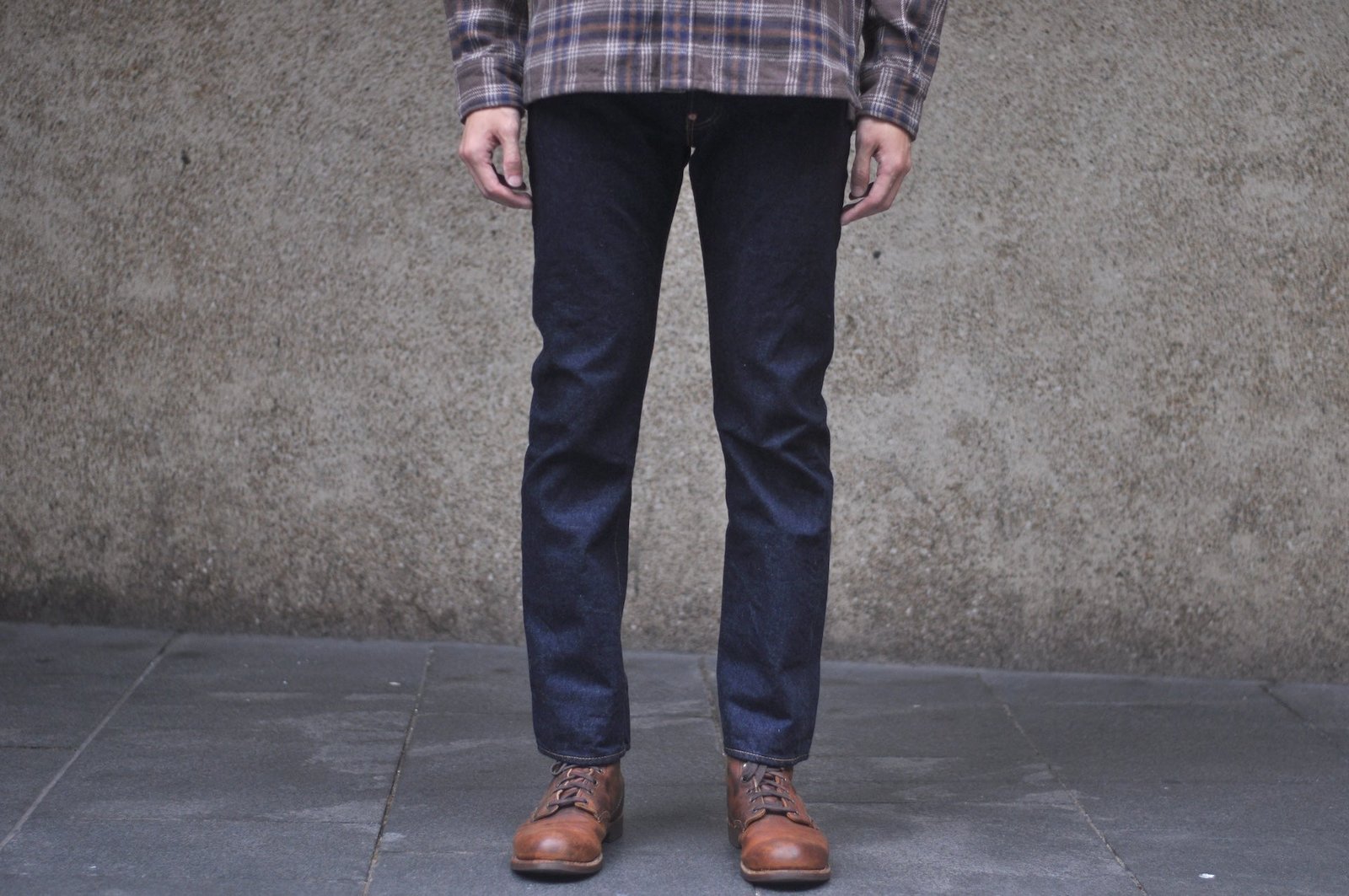
The 66 is the one that tends to pull in the denim-obsessed who want a cleaner, slightly dressier line, and it is the model most often discussed and photographed by owners, which tells you where the enthusiast heart of the brand sits. It is lightly tapered with an Ivy League character, so it wears comfortably with more than just boots and a tee, and it bridges into slightly smarter outfits in a way the XX does not quite. If you already own a straight-leg workwear jean and want something sharper on the same 15oz fabric and finishing, the 66 is the direct answer. Between the two, think of the XX as the workwear straight and the 66 as the refined everyday, and buy according to which end of your wardrobe needs filling.
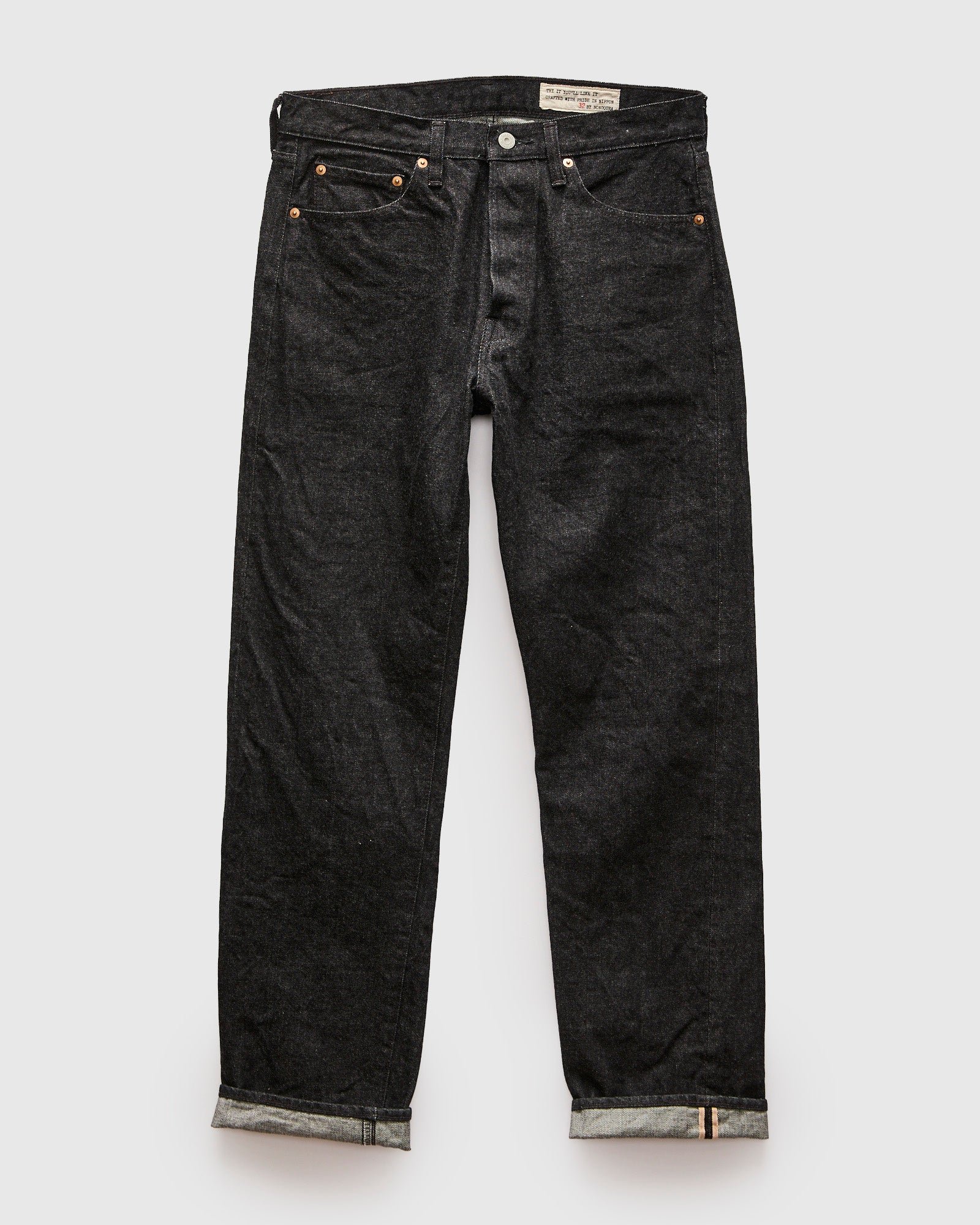
One thing is true of both, and it is worth saying twice because it is the most common sizing mistake: the inseams are short by design. That is a feature for shorter frames and a real consideration for tall men. Do not assume a standard long inseam, and do not plan on a deep cuff.
How Boncoura compares to its rivals
The most useful way to judge a brand is against the ones a buyer actually cross-shops, so here is an honest comparison against the three names that come up most often in the same breath. Criteria first, then the read: what matters is period fidelity, fabric character, cut, and price position.
| Brand | Core approach | Where it wins | Price vs Boncoura |
|---|---|---|---|
| Boncoura | Reinterpretation, refinement | Restraint, detailing, clean cut, cohesive full wardrobe | Reference point, top of bracket |
| Warehouse and Co. | Strict reproduction | Period fidelity, breadth of vintage models, value for the spec | Roughly ¥10,000 less on comparable jeans |
| Fullcount | Comfort-forward reproduction | Softer Zimbabwe cotton hand, easy first-repro wearability | Generally less expensive |
| TCB Jeans | Honest, value repro | Price, workshop transparency, faithful cuts | Notably less expensive |
The takeaway is not that Boncoura beats these brands, because it does not, and pretending otherwise would insult an audience that owns them. The takeaway is that it does a different job. If you want maximal period accuracy for the money, Warehouse is the smarter buy. If you want the softest, easiest introduction to raw denim, Fullcount. If you want the best honest value in the category, TCB. Boncoura wins specifically when you value a refined, slightly dressier line and a designer’s restraint, and you are willing to pay the premium a small one-man house charges for it. Owners themselves flag the price gap, noting Boncoura runs roughly ¥10,000 above a comparable Warehouse jean, so the premium is real and you should buy it with eyes open.
Fades and long-term wear
Because I have not worn a pair myself, treat this section as owner consensus rather than my own tape and camera, and I will flag it as such. The reports are consistent enough to be useful. On the indigo Ike-Momen, owners describe high-contrast vertical fading, strong leg twist within the first several months, and honeycombs behind the knees and whiskers at the hips that come in sharply because of the rope-dyed warp and slubby yarn. More than one long-term wearer describes a pair of Boncoura as their single most-reached-for jean after a year or more of regular rotation, which is the highest praise this audience gives, because it means the jean beat everything else in the closet on the days it actually mattered. The black Ike-Momen fades differently, drifting toward a soft charcoal rather than blue, which is the point of buying black. None of this is unique to Boncoura in kind, but the combination of a characterful slubby cloth and a clean cut means the fades land on a silhouette that stays sharp as it ages, and that is genuinely a little unusual.
Who buys Boncoura, and how to wear it
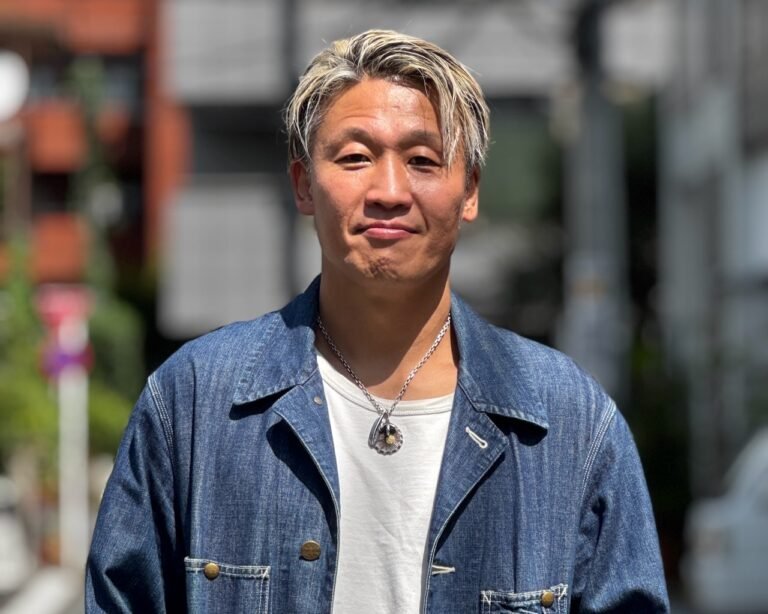
The typical Boncoura owner is a committed denim person, in Japan and increasingly abroad, who already understands the category and is choosing on nuance rather than novelty. This is rarely a first raw-denim purchase. It is the jean a man buys once he knows he wants a high rise, era-correct detailing, and a slightly dressier line, and once he is comfortable spending at the upper end for a one-designer brand that does not compromise. If you respect made objects, tools, and process, and you want denim that reads quiet rather than loud, you are exactly the audience Morishima is cutting for.
On styling, the brand’s own breadth is the best guide. Because the cut sits a notch dressier than pure workwear, a Boncoura jean takes an oxford or a chambray shirt and a pair of loafers as easily as it takes a tee and boots, which is the amekaji instinct of blending American workwear with a cleaner Ivy sensibility. The strongest single move available to a Boncoura buyer is to pair a jean with one of the brand’s Type 1, 2, or 3 denim jackets in the same Ike-Momen cloth, because the two pieces will then fade as a matched set over the years and read as a deliberate denim-on-denim outfit rather than an accident. If you are building a wardrobe rather than buying a single item, that is the play.
Fit and sizing
Verdict: take your true measured waist, and treat the inseam as short unless the specific listing says otherwise. The jeans sold through Western stockists are rinsed, so with a cold wash and a line dry the shrinkage is minimal and you are largely buying the size you will keep. Morishima himself recommends cold washing and line drying to keep shrink down. If you are eyeing one of the loomstate or natural-indigo limited runs instead, expect more shrink and size accordingly from that product’s own chart.
The two fit traps are rise and length. Boncoura rises sit high and the inseams are intentionally short, both drawn from Japanese proportions and a cleaner vintage line. Owners with taller frames flag this directly, and the brand does not offer extended sizes, so a very tall or long-legged man can simply run out of length, and no amount of love for the details fixes an inseam that is not there. Jeans are offered roughly across a 28 to 40 waist range depending on model and retailer. If you are between sizes, weigh a size up for comfort at the high rise rather than sizing down, but confirm the specific model’s measurements with your retailer first, because on a high-rise jean a half inch in the rise changes the entire experience. Buying from a stockist that will answer sizing questions, rather than blind from Japan, is worth real money here.
How Boncoura sizing runs, and why the jackets are so roomy
Boncoura runs large, and the outerwear runs larger still. This is the single most important practical thing to know before you buy, because it catches people who assume the tagged size matches their usual brand. The house cut favors a fuller, more comfortable build than a lot of the slim Japanese repro out there, and it shows most in the jackets.
Take the Type II denim jacket in the 15oz Ikemen cloth. Measured flat, per Selfedge’s own spec sheet, the chest runs 44.5 inches at size 36, 46.5 at 38, 48.5 at 40, and a full 50 inches pit to pit at 42, with shoulders from 19.25 up to 20.5 inches. Those are generous numbers for the tagged size. For a real-world reference point, the European stockist stuf-f lists a 180cm, 72kg wearer, roughly five foot eleven and about 159 pounds, in a size 38. When a fairly big frame takes the second-smallest size in the range, that tells you the whole line is cut roomy through the chest.
| Size | Chest (pit to pit) | Shoulder |
|---|---|---|
| 36 | 44.5″ | 19.25″ |
| 38 | 46.5″ | 19.5″ |
| 40 | 48.5″ | 20.25″ |
| 42 | 50″ | 20.5″ |
Type II jacket, 15oz Ikemen denim, measured flat. Source: Selfedge spec sheet, checked August 2026. Other models vary, so always check the specific listing.
What to do about it. On the jackets especially, most people should consider sizing down from their usual, and everyone should measure a jacket they already own flat across the chest and compare, rather than trusting the tag. If your favorite trucker measures 44 inches pit to pit and fits the way you like, a Boncoura 40 at 48.5 inches will wear noticeably bigger. On the jeans the effect is smaller but the instinct is the same, go by your measured waist rather than the label, and treat the inseam as short. When in doubt, buy from a stockist that will send measurements and accept a return, because on a brand that runs this differently from the norm, the tag alone will mislead you.
The value question
Is it worth it. The honest answer runs through cost-per-wear and through what you actually value. At roughly $375 to $455 for a jean, Boncoura is expensive in absolute terms and a clear premium over Warehouse, Fullcount, and TCB. But this is a garment engineered to be worn for years and to improve the whole time, so the relevant number is not the sticker, it is the sticker divided by the wears. A jean worn twice a week for five years is a few hundred wears, and at that point the math looks very different from a fast-fashion pair replaced every season. Add that Boncoura holds its interest on the resale market reasonably well for a small brand, and that a one-designer house with no compromises is exactly the kind of maker this audience wants to keep in business, and the premium becomes defensible. It is still a premium. If your budget says Warehouse or TCB, buy those with a clear conscience, because they are superb. Boncoura is the buy when refinement is the thing you are actually paying for.
The honest downsides
Every brand worth buying has a case against it, and hiding it would insult you. Here is Boncoura’s.
Price. Boncoura sits at the top of its bracket and runs roughly ¥10,000 above a comparable Warehouse jean before you even add import and duty abroad, which widens the gap further in dollars, pounds, or Australian dollars. You are paying for a small single-designer operation, and whether that is worth it depends entirely on how much you value refinement over raw period accuracy.
Not the most period-correct. If your priority is a stitch-accurate reproduction of a specific year, Boncoura is deliberately not that, and a brand like Warehouse will out-detail it on pure fidelity. That is a difference in mission rather than a flaw, but it matters if fidelity is what you came for.
Sizing for tall and long-legged men. The high rise is a taste question, but the short inseam and the absence of extended sizes are hard limits. Long legs may find the brand simply does not fit.
Availability. This is a small maker. Stock outside Japan is thin, specific models and sizes sell through, and you will often buy what a stockist happens to have rather than exactly the wash and size you wanted. The limited runs move especially fast.
Where to buy Boncoura
Boncoura is carried by a small set of respected specialists across the English-speaking markets, plus its own Japanese store. Prices were checked in August 2026 and vary with exchange rates, duty, and markup, so confirm on the page before buying.
- United States: Selfedge (jeans around $375) and Blue Owl Workshop in Seattle (jeans around $455). Two of the most trusted repro retailers in the country, both with real sizing help.
- United Kingdom: Rivet and Hide, with shops in London and Manchester (jeans around £335) and free UK shipping over £50.
- Australia: Corlection, with stores in Sydney and Melbourne and international shipping across more than 40 countries (jeans from around A$660). The single strongest stockist for range, carrying jackets, chinos, knitwear, leather, and accessories alongside the denim.
- Europe: stuf-f in Germany, English-language and shipping across the EU.
- Japan and direct: the Boncoura official online store for the full lineup at source prices, though you take on shipping and duty yourself.
A word on import costs. Buying direct from Japan looks cheaper on the sticker, but duty, VAT or GST, and shipping can erase the saving and add real friction if you ever need to return or exchange. For most buyers outside Japan, a domestic specialist like Selfedge, Rivet and Hide, or Corlection is the better experience even at a higher headline price, because the sizing help and the returns are real and the limited runs are already landed in your market.
Frequently asked questions
Is Boncoura worth the money?
If you value refined, understated detailing and plan to wear the garment for years, yes. You are paying a premium over rivals like Warehouse, roughly ¥10,000 on the jeans before import, for a single-designer brand that compromises on nothing. If you want the most period-correct reproduction or the best spec for the lowest price, it is not the value pick, and Warehouse or TCB will serve you better.
What is the difference between the Boncoura XX and 66?
The XX is the flagship classic straight with more room through the leg, drawn from the vintage 501XX. The 66 is slimmer and lightly tapered with an Ivy League character, a cleaner and slightly dressier line. Both use the same 15oz rinsed Ike-Momen selvedge and the same finishing. Choose the XX for a classic workwear straight, the 66 for a sharper everyday silhouette.
What is Ike-Momen?
Ike-Momen is Boncoura’s name for its house 15oz selvedge denim, woven from twisted, uneven yarns with a rope-dyed indigo warp and a natural weft. It is the recipe behind the brand’s high-contrast vertical fading and pronounced leg twist.
Does Boncoura denim shrink?
The mainline jeans are sold rinsed, so shrinkage is minimal if you cold wash and line dry, which is what the founder recommends. You are mostly buying the size you will keep. The loomstate and natural-indigo limited runs shrink more, so size those from their own charts.
Should I size up or down in Boncoura?
Take your true measured waist. Because the rinsed denim barely shrinks, there is no need to size down for shrink. If you are between sizes, a size up can be more comfortable given the high rise. Always confirm the specific model’s measurements with the retailer first.
Is Boncoura good for tall guys?
Often not. The inseams are intentionally short and the brand does not offer extended sizes, so long-legged men can run out of length, and the high rise reads as a lot on a long torso. Check the inseam figure for your size before committing.
How does Boncoura compare to Warehouse?
Warehouse is a strict reproduction house and will out-detail Boncoura on pure period accuracy for less money. Boncoura is a reinterpretation house that wins on refinement, restraint, and a cleaner cut. They do different jobs. Buy Warehouse for fidelity and value, Boncoura for a dressier, more considered line.
Where can I buy Boncoura outside Japan?
Selfedge and Blue Owl Workshop in the US, Rivet and Hide in the UK, Corlection in Australia, and stuf-f in Germany all carry it, alongside the brand’s own online store in Japan. Links are in the Where to Buy section above.
Related reading
- 36 Japanese Denim and Americana Reproduction Brands: A Field Guide
- The Best Heavyweight Japanese Selvedge Jeans You Can Actually Wear
- How to Build a Classic American Casual Amekaji Wardrobe
Sources
- Storied Magazine, Boncoura founder and brand profile (Hisashi Morishima background, founding, philosophy)
- Rivet and Hide, Boncoura brand page (name origin, philosophy, UK pricing)
- Selfedge, Boncoura 66 product listing (fabric, construction, US pricing)
- Blue Owl Workshop, Boncoura collection (XX and 66 models, fits, US pricing, made in Japan)
- Boncoura official online store, salonboncoura.com (lineup, model pricing, brand statement)
- Corlection, Boncoura collection (full range, limited editions, Australian pricing, international shipping)
- Superfuture / Supertalk Boncoura thread (owner sentiment, model comparison, sizing and fade reports)
Last updated: August 21, 2026. This is a deeply sourced brand study, not a hands-on review. When a pair is measured and worn in, this page will be updated with a full measurement table and dated fade photography, and this line will change to say so.